


Hey hey,
Last week, I needed to see if a specific visa policy had changed. I did what most people do. I Googled it. I got ten blue links, three ads, a Reddit thread from 2019, and an AI-generated summary that was hard to make sense of.
I tried the same question on Perplexity. Within seconds, I had a clear, cited answer with links to the actual government source. That moment stuck with me. Not because Perplexity was better at one query. But because it made me realise I had been settling for a broken experience, and I hadn't even noticed.
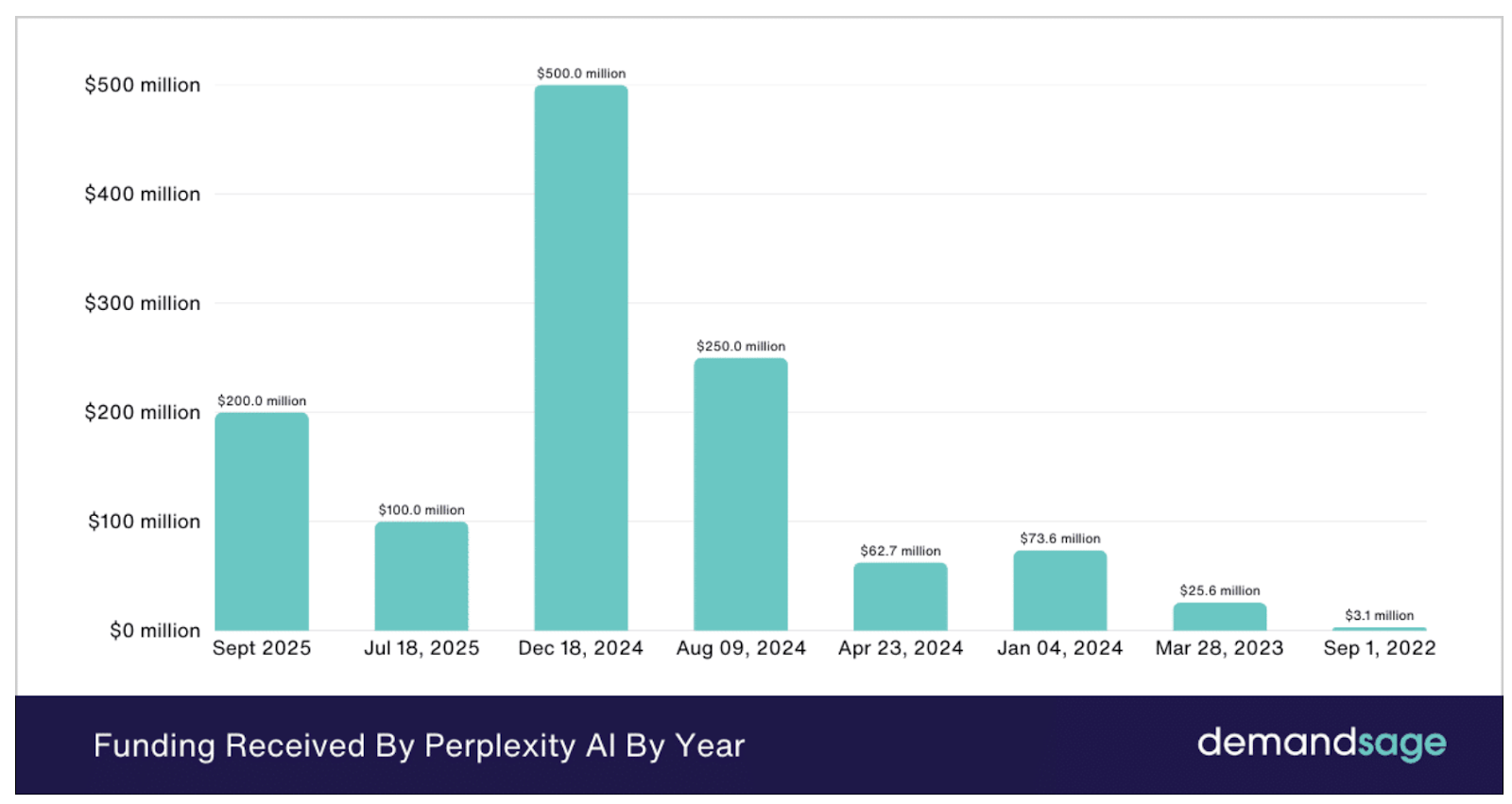
Turns out, I'm not the only one. Perplexity AI went from processing 3,000 queries a day to 30 million in under three years. It's now valued at $20 billion, backed by Jeff Bezos and Nvidia, and it just made a $34.5 billion bid to buy Google's Chrome browser.
Yes, a startup worth $20 billion offered $34.5 billion for Chrome. We will get to that.
But first: how does a three-year-old startup pick a fight with the most dominant product in the history of the internet?
The Frustrated Googler Who Built the Anti-Google
Aravind Srinivas grew up in Chennai, India. As a kid, he idolised Sundar Pichai, another Chennai native who had gone on to lead Google.
Srinivas followed a similar path. He graduated from IIT Madras and did his PhD at UC Berkeley. Research stints at Google Brain, DeepMind, and OpenAI. He was living inside the AI world's most elite institutions. But something kept bothering him.
As an AI researcher, he spent hours searching for information, and Google kept giving him pages of links instead of direct answers. The irony wasn't lost on him: the company with the world's best AI was still making users do the hard work of finding information themselves.
The best product ideas don't usually start with "what feature is missing?" They start with "what experience is broken?" Srinivas wasn't frustrated by a lack of technology. He was frustrated by how that technology was being used, or rather, not being used.
During a summer internship at DeepMind in London, Srinivas slept at the office (his rental was terrible). One night, he found a book in DeepMind's library called In the Plex, a chronicle of Google's founding.
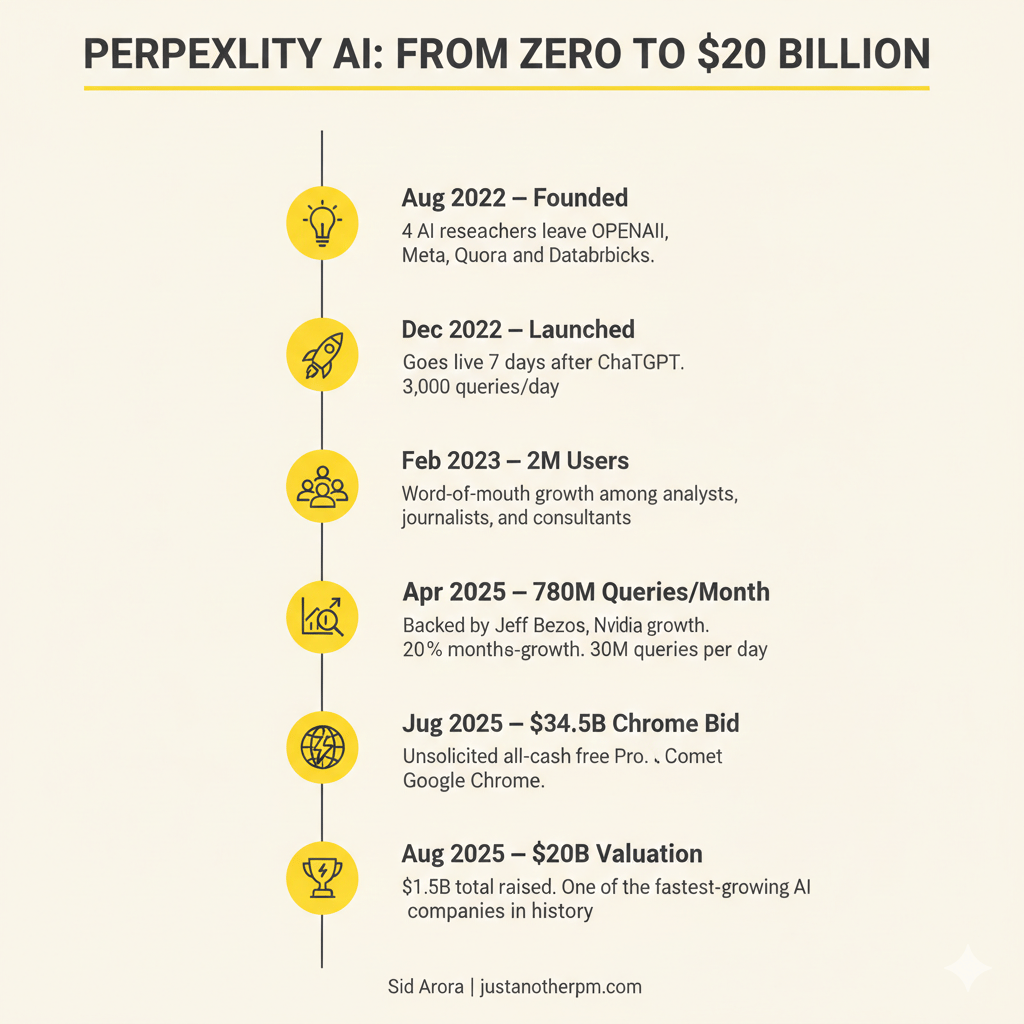
He read it multiple times. Two Stanford PhD students had built Google. Srinivas was halfway through his PhD. The math clicked. In August 2022, he left OpenAI and co-founded Perplexity with three others: Denis Yarats (ex-Meta AI), Johnny Ho (ex-Quora), and Andy Konwinski (co-founder of Databricks).
Each brought a specific superpower: AI research, search engineering, and large-scale infrastructure. Seven days after ChatGPT launched in December 2022, Perplexity went live. While the world was asking "Is ChatGPT a Google killer?", the real threat was this tiny search startup nobody had heard of.
Because ChatGPT could do almost anything. Perplexity was laser-focused on doing one thing so well, which is answering questions. Instead of showing you a list of links and asking you do the work, Perplexity reads the internet and gives you a direct answer, with sources.
Google says, "Here are 10 pages that might have your answer. Good luck." Perplexity says, "Here's your answer. Here's where I got it."
Shipping at 80% Perfect
Most startups wait for a polished product before launching. Srinivas did the opposite. He adopted an "80% perfect" philosophy. He shipped fast, learnt from users, and iterated. Every release became a foundation for improvement rather than a final product.
"There's really nothing to lose from taking risks," Srinivas has said. " Many avoid risks because they worry about losing or how others might see them, when in reality, most potential critics aren't paying attention." This speed became Perplexity's defining advantage.
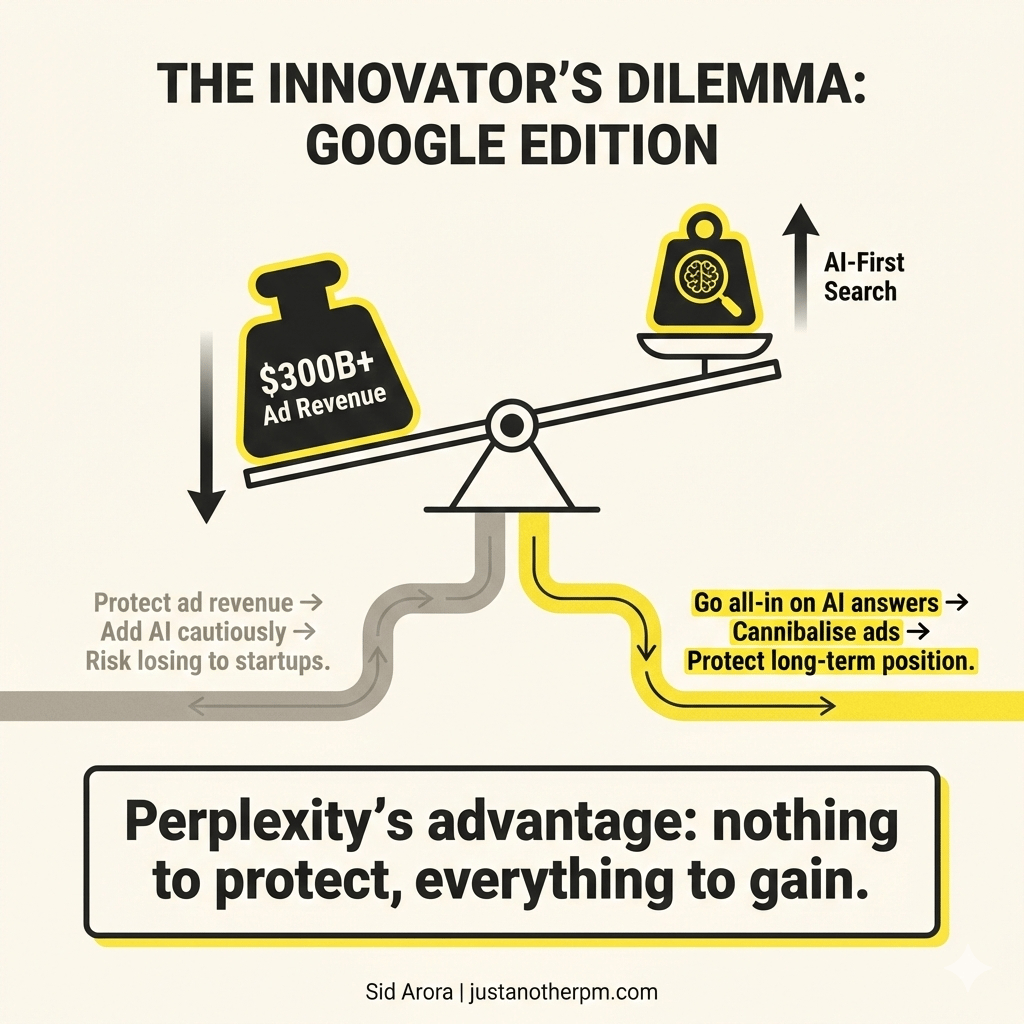
While Google debated internally about cannibalising its own $300 billion search ad revenue with AI features, Perplexity shipped updates weekly. No legacy revenue to protect. No board asking "but what happens to our ad business?" That's the thing about competing against giants.
Their biggest strength, in Google's case, a $300 billion ad machine, is also the very thing that prevents them from fully embracing the future. Google can't go all-in on giving direct answers to people because it means fewer clicks on ads. Perplexity has no such conflict.
- By February 2023, just two months after launch, Perplexity had 2 million monthly active users.
- By May 2025, it was processing 780 million queries per month. That's a growth of over 20% month-over-month.
- In two years from launch, it was valued at $20 Billion.
When asked about his company's moat, Srinivas said it is speed.
360 Million Users in One Deal
Great product, limited distribution. That was Perplexity's classic startup problem. Google has Chrome, Android, and default search deals worth billions. How does a startup compete with that kind of reach?
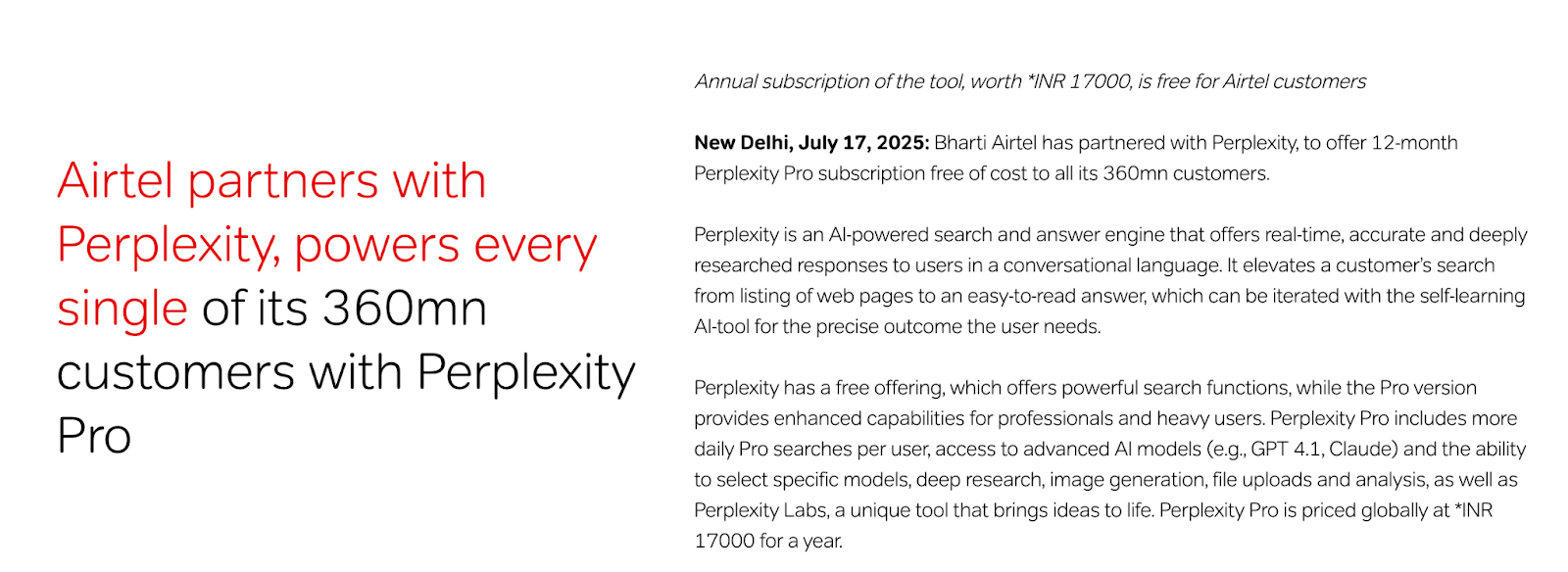
Srinivas found an odd answer: telecom companies. In July 2025, he struck a deal with Bharti Airtel, India's second-largest telecom operator. The terms were extraordinary. All 360 million Airtel subscribers would get a 12-month Perplexity Pro subscription worth $200 per user for free.
The results were immediate. Perplexity's downloads in India surged 600% year-over-year. Monthly active users grew 640%. The app shot to #1 on Apple's App Store in India, overtaking ChatGPT.
India became Perplexity's largest market by monthly active users (virtually overnight). And this wasn't a one-off.
Perplexity had already partnered with India's Paytm earlier in 2025 and has signed partnerships with over 25 telecom firms globally, including SoftBank in Japan, SK Telecom in South Korea, and T-Mobile in the US.
Instead of spending billions on marketing to compete with Google's distribution, Perplexity embedded itself directly into the infrastructure people already use every day.
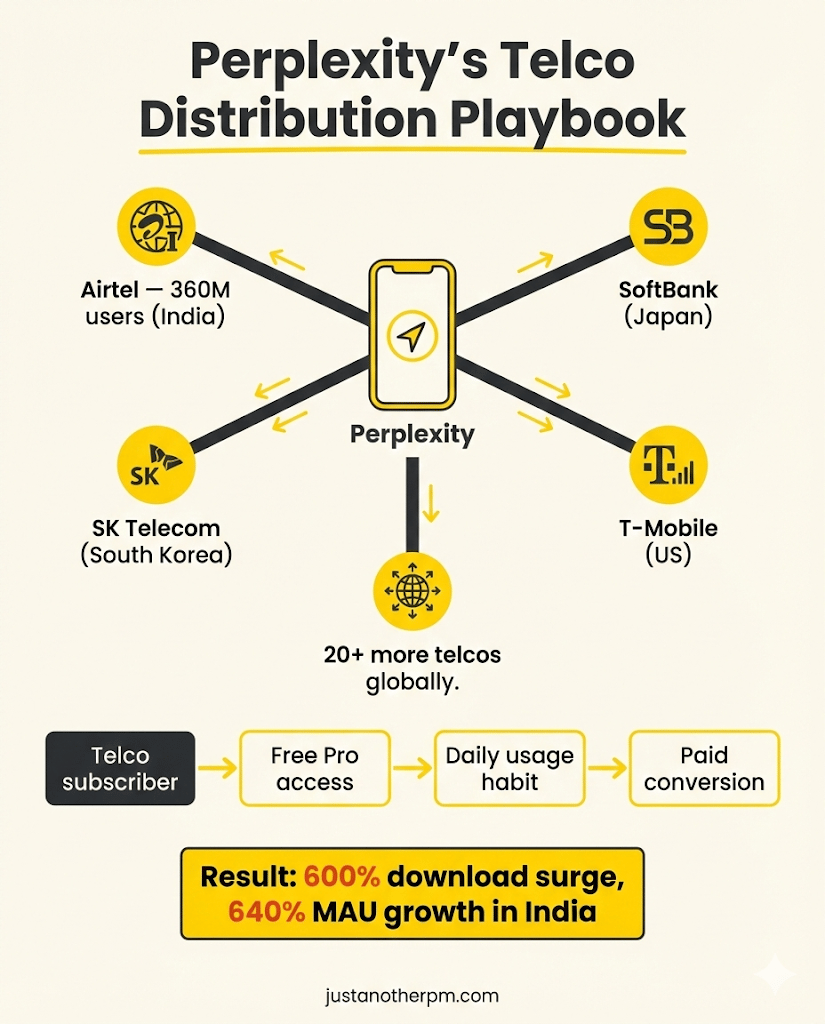
The question isn't just "how do we acquire users?" but "who already has access to our users, and what deal could we structure to reach them?" Giving away $200 subscriptions to 360 million people sounds expensive. But it bought distribution that no amount of advertising could match.
For Airtel, offering a $200 AI subscription for free is a tempting reason for subscribers to stay, making it a retention lever for the telco as well. Both sides win.
The $34.5 Billion Power Move
In August 2025, Perplexity made headlines by sending an unsolicited $34.5 billion all-cash bid to buy Google's Chrome browser.
A company valued at $18 billion offering nearly double its own worth for a single Google product. On paper, it doesn't make sense.
But the timing was strategic. A US federal judge ruled that Google illegally maintained a monopoly in search, and the Department of Justice was considering forcing Google to divest Chrome.
Perplexity positioned its bid as "designed to satisfy an antitrust remedy in the highest public interest." Several venture capital funds agreed to back the deal. Google hasn't accepted. And probably never will.
But that wasn't really the point.
The bid positioned Perplexity as a serious player in the browser wars.
It generated massive media attention worth millions in free coverage. And it meant to investors and partners that this startup thinks in billions.
Sometimes the boldest move isn't the one that succeeds but the one that shifts how the market perceives you.
One month before the Chrome bid, Perplexity had already launched Comet, its own AI-powered browser built on Chromium.
Unlike Chrome, where AI features feel bolted on, Comet puts Perplexity's answer engine at the core of the browsing experience. It launched at $200/month for premium users. By October 2025, it was open for all.
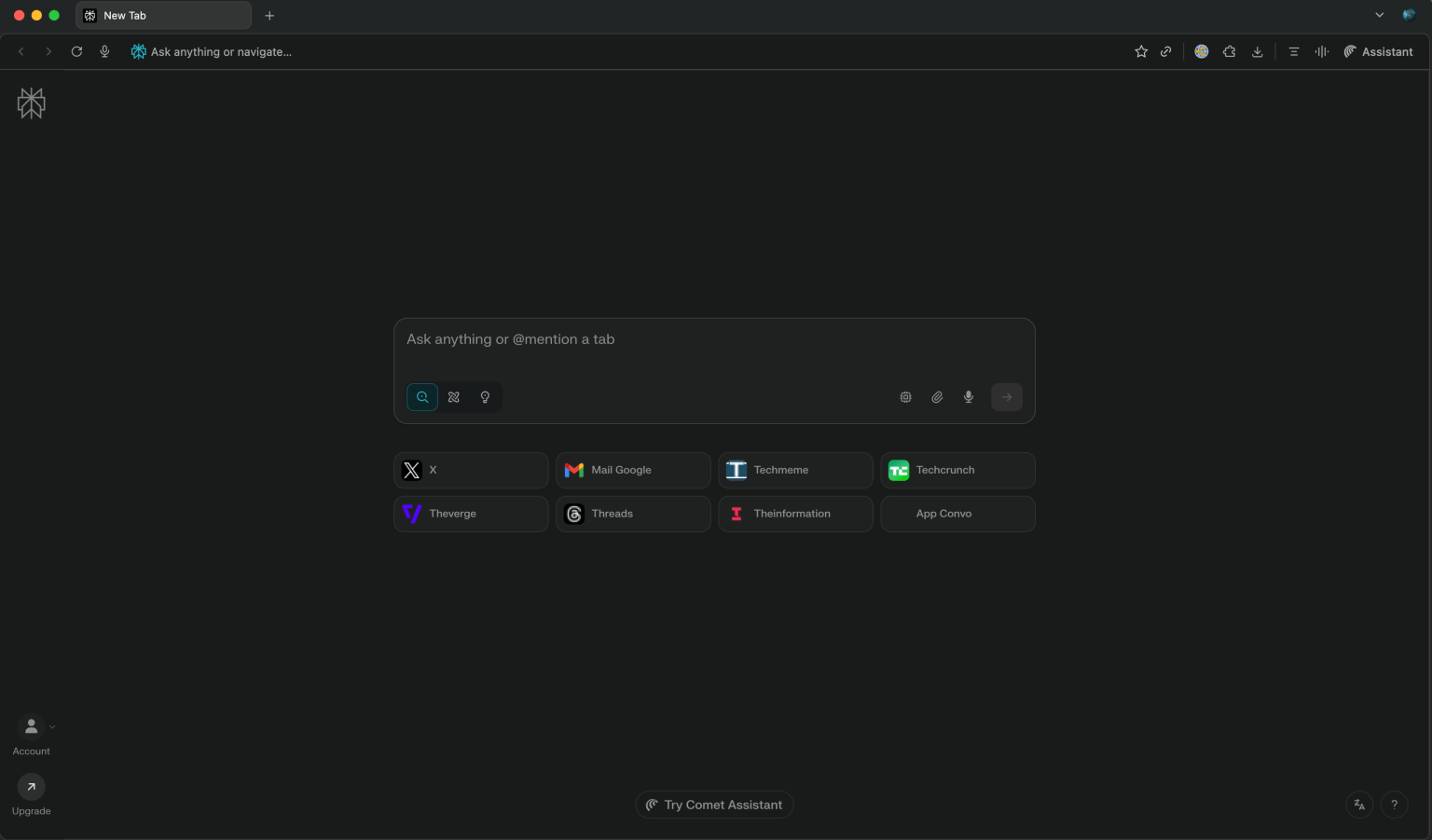
As Srinivas put it, becoming the default browser means "infinite retention."
Liking this post? Get the next one in your inbox!
The Mess That Comes With Moving Fast
Perplexity's growth hasn't been controversy-free. Multiple major publishers, including Forbes, The New York Times, and Dow Jones, have accused it of scraping their content without permission.
Forbes alleged that Perplexity published a story largely copied from a proprietary article without proper attribution. Investigations by Wired and Cloudflare said that Perplexity relied on undisclosed web crawlers that bypassed websites' explicit blocks on scraping.
Srinivas acknowledged "rough edges" but maintained that Perplexity "aggregates" rather than plagiarises.
The company has since launched a publisher revenue-sharing programme called Comet Plus, where participating publishers (CNN, The Washington Post, Conde Nast, and others) receive 80% of subscription revenue.
It's an attempt to turn adversaries into allies. But the tension between moving fast and respecting content creators is one of the defining challenges of the AI search era.
The "80% perfect" philosophy that helped Perplexity grow so quickly is the same philosophy that led to these controversies. Speed cuts both ways.
Surrounded by Giants
Perplexity isn't just fighting Google alone. It's surrounded.
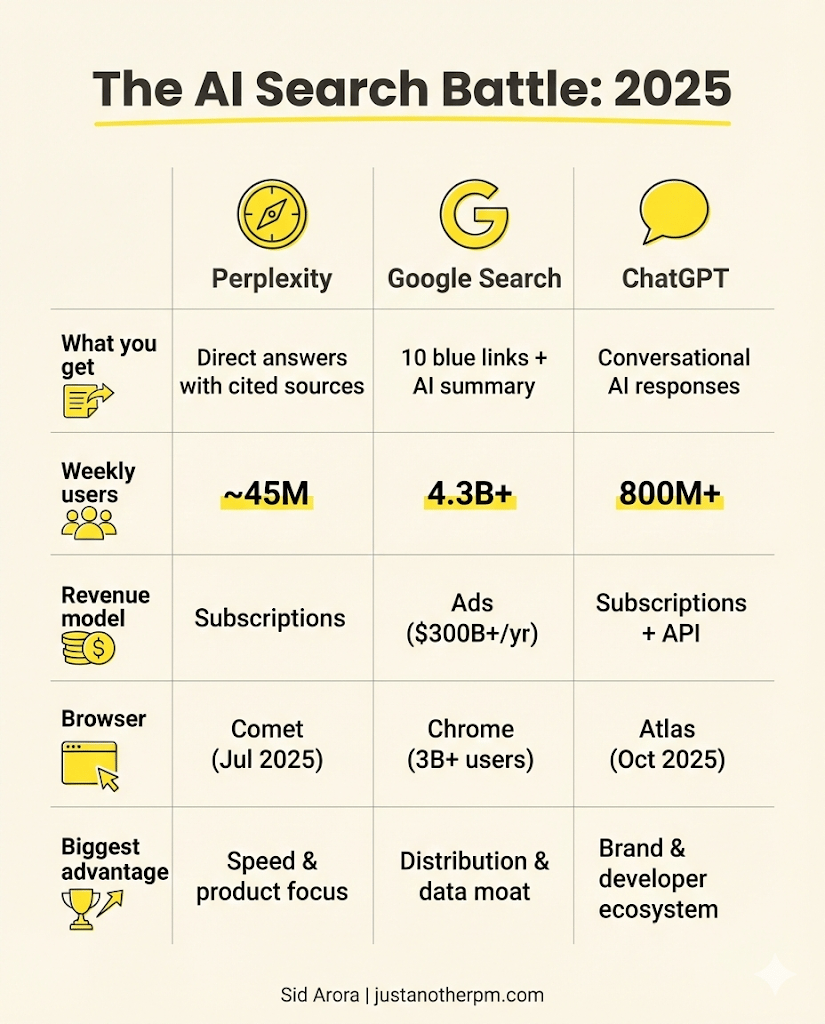
Google has responded by launching AI Overviews, AI-generated summaries at the top of search results, and integrating Gemini into Chrome. OpenAI launched its own AI browser, ChatGPT Atlas, in October 2025. Microsoft has embedded Copilot into Edge. Yet Perplexity keeps growing.
Because none of the giants are willing to commit to the answer engine model. Google can't because it would destroy its ad business. OpenAI's Atlas is impressive, but it's just an extension of a general-purpose chatbot. Microsoft is hedging across too many products.
Perplexity's advantage is that it has nothing to protect. It can go all-in on the future of search without worrying about cannibalising existing revenue. In tech, the company with nothing to lose often moves faster than the company with everything to protect.
Where This Goes Next
Perplexity probably won't "kill" Google. At least not yet. But it's doing something arguably more important: proving that the way we search for information is fundamentally changing. For twenty-five years, search meant typing keywords and clicking links.
That model is breaking. The company that figures out what replaces it has a shot at building the next trillion-dollar platform.
A 31-year-old from Chennai, who used to sleep in his office during internships and read books about Google's founding in the DeepMind library, is now the person Google is most worried about. He didn't have Google's distribution. He didn't have OpenAI's brand. He didn't have Microsoft's money.
What he had was a frustration that billions of people shared, but nobody was solving, and the willingness to ship a solution before it was perfect.
That's one heck of a product story. What do you think: Will Perplexity survive the giants, or will it get crushed?
Reply and let me know.
Until then,
Sid
More from
Other


Did You Know LLMs Actually "Think"?

What's Happening To Temu?


